
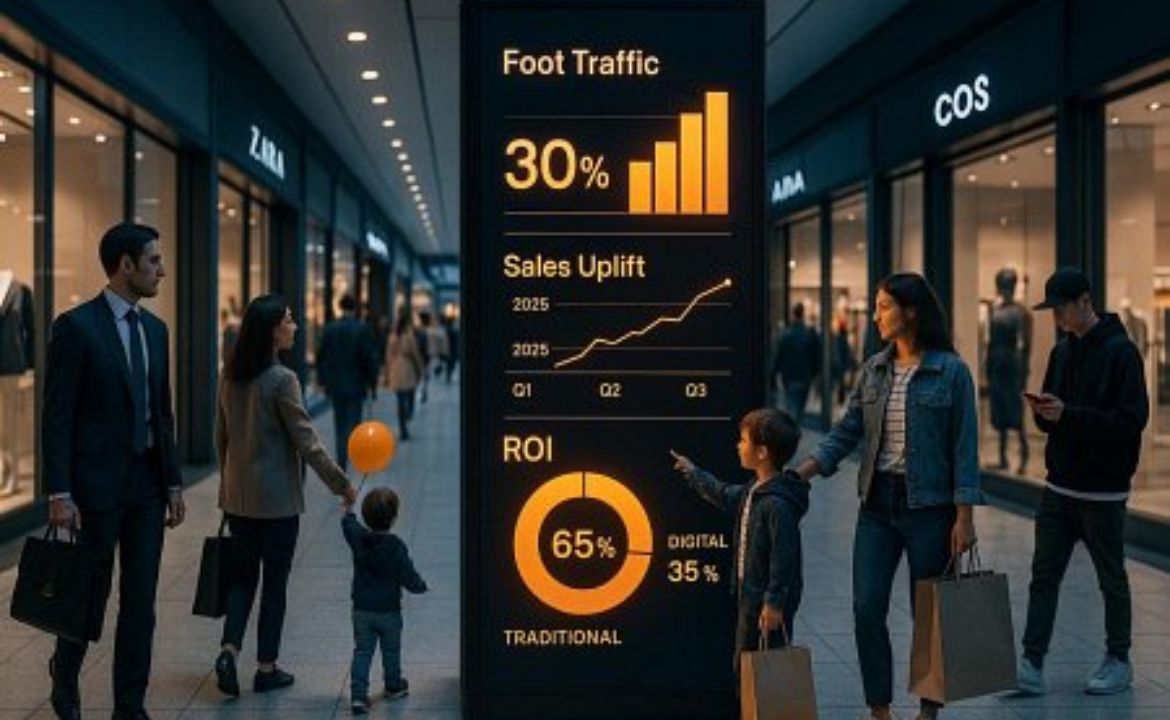
Measuring how well shopping centre display ads work is important for retailers and brands who want to make the most of their marketing budget and understand what actually appeals to shoppers.
Even though most purchases still take place in physical stores, it can be tricky to connect in-store advertising to real results, especially when compared to the detailed tracking available online. Since shopping centre display advertising still plays a big role in influencing buys, it’s important to move from guesses to using real data for decision-making.
With e-commerce growing and the costs of running physical shops increasing, showing that in-store ad campaigns really pay off has become more important than ever. You can only make things better if you can measure them, so being able to track how shopping centre display ads perform is key for improving and making smart decisions. Be Media offers comprehensive analytics and measurement solutions for retail advertising campaigns.
Why Should You Measure Shopping Centre Display Ads?
Checking how well shopping centre display ads work isn’t just a formality-it helps you make choices that can improve profits and shape future marketing plans. In busy retail settings, every penny counts, so you need to know what works. If you skip measurement, advertising can become a guessing game that may waste money and time.
Knowing the data behind campaigns allows retailers to stop relying on hunches. It answers important questions like: Are the displays bringing in more sales? Are they helping people remember the brand? Are they getting customers interested? These answers help shape better campaigns in the future.
What Are the Main Benefits for Retailers and Brands?
- Retailers get a clear view of which ads pull in customers and which locations or products perform best.
- They learn about shopper habits in the store, spotting useful trends.
- Brands find out if their in-store ads make a difference and if their messages are working.
- By seeing how ads affect sales decisions, brands can improve their ad design and product displays.
- This process helps both groups make each campaign more effective than the last one.
Effect on ROI and Budget
There is a clear link between measuring results and getting a good return from your spending. If you can track increases in sales, traffic, or customer recall because of a specific ad, you can work out exactly how much you’re earning for every dollar spent.
With this data, it’s easier to spend more on ads and tactics that prove themselves, while dropping or fixing ones that don’t perform. This way, marketing spend becomes an investment that helps the business grow, not just a cost.
Building Data-Based Advertising Plans
Before, in-store ads were usually planned based on past experience or rough sales figures. Now, new technology makes it possible to base decisions on real data.
By testing parts of your campaign-like where you put signs, what the message says, or how the ad looks-you can see what really works. This allows you to keep making small changes to improve results, just like online marketers have done for years.
What Should You Measure? Key Metrics
To really see how effective your shopping centre ads are, you have to look at different measurements-not just sales. Collecting a variety of data gives a better overall view of how ads affect shoppers at every step, from first noticing the display to actually buying something.
Footfall and Visitor Counts
Tracking the number of people who come near your display or enter your store during campaigns versus other times shows whether your ads are getting attention. If more people visit the display area, it likely means the ad is being noticed.
Tools like sensors or Wi-Fi analytics give more details about when people visit and how long they stay. This helps you see if shoppers are interested enough to get closer or stay longer near the ad.
Conversion Rate: From Viewing to Buying
The conversion rate shows what portion of people who see a display actually go on to make a purchase.
| Metric | Description |
| Conversion Rate | Number of transactions from a display, divided by number of viewers |
High rates suggest the ad not only catches eyes but also encourages people to buy. To boost conversions, make sure displays look good, are easy to read, and explain why the product is worth buying.
Sales Uplift Near Promoted Areas
Sales uplift measures the extra sales for products or sections after a campaign starts. By comparing numbers before and after, you see what difference the display ad really makes. It’s wise to check not only sales of the featured product, but the total sales for the category and the store, to avoid hurting sales elsewhere.

Customer Engagement and Time Spent Near Displays
Time spent by shoppers near an ad can show how interested they are. More time means more engagement and usually a higher chance they’ll buy. Engagement can also be measured by things like QR code scans or interactions with digital screens. A high level of interaction means people are taking notice.
Brand Awareness and Recall
Display ads aren’t just for immediate sales-they help people recognize and remember your brand for future purchases. You can check this through quick shopper surveys after a campaign by asking if they remembered seeing the ad and what they think of the brand now. Gaining recognition can lead to long-term wins.
Return on Investment (ROI)
| Measurement | Purpose |
| ROI | See if the money spent on displays leads to extra sales and profit |
To measure ROI, compare all campaign costs (making, installing, maintaining displays) to the extra sales they bring. Permanent displays might take longer to pay off, but can end up being very profitable over time.
How to Measure Shopping Centre Display Ad Performance
A mix of old and new-traditional methods and modern tech-is needed to track how well your display ads work in a shopping centre, since you can’t get easy data like you do online. Choosing the right ways to measure things depends on what you want to achieve and what resources are available.
Tracking Foot Traffic With Sensors and Wi-Fi
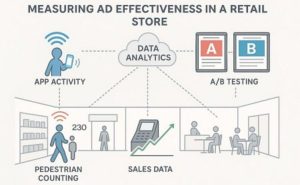
Foot traffic counters, like sensors or Wi-Fi trackers, can show how many people are exposed to your display. They can reveal trends such as busier times or popular ad locations.
- Infrared or thermal sensors count passersby or people who enter a zone.
- Wi-Fi analytics can anonymously track movement, time spent in areas, and repeat visits using shoppers’ smartphones.
Using POS Data and Sales Analysis
Sales records from your Point of Sale (POS) systems allow a direct comparison of sales during and outside of campaigns. Useful metrics include Sell-Through Rate, Sales Uplift, Average Transaction Value (ATV), and Units Per Transaction (UPT). Analyzing these together gives a more complete picture of how profitable your displays are.
Gathering Customer Feedback
Surveys, whether in the store or online, add context to the numbers. Ask simple questions: Did you notice the ad? Did it help you decide what to buy? Even with a small sample, these insights show what people really think about your in-store ads.
Digital Engagement Tools
Including interactive features like QR codes, touchscreen displays, or small surveys makes it easier to count direct interactions with the display. This can tell you how many people go a step further than just looking at the ad.
Testing Different Versions (A/B Testing)
Running different versions of ads in similar locations lets you see what works best. Try out different designs, messages, or placements. Comparing results helps you focus your efforts where they’ll have the biggest impact.
Common Problems When Measuring Effectiveness
Even with good tools, some problems can make it tough to measure shopping centre display ads accurately. Knowing what to watch out for can help you get better results.
- Outside Factors and Seasons: Weather, events, school holidays, and economic trends can change shopper habits, making it harder to see the true effect of an ad.
- Attribution Across Channels: Customers see ads everywhere, so figuring out which one triggered a purchase is often hard.
- Differences in Store Setup: Ads might not be displayed the same way in all stores, or some might be missed altogether. Regular checks help keep things on track.
- Sales Cannibalization: Promoting one product can accidentally pull sales away from similar products rather than increasing total sales. It’s wise to check total category sales, not just the featured item.
- Handling Large Data Volumes: Collecting and making sense of lots of data from different sources can be tough, and slow data analysis can mean missing out on chances to improve quickly.
Combining Online and Offline Data
Today’s shoppers move between online and in-person shopping easily. To get the best measure of display ad effectiveness, combine data from both channels. This provides a full view of a customer’s journey.
Connecting In-Mall and Digital Campaigns
Using tools that match in-mall ad viewing with online visits or actions (while respecting privacy) helps see the combined effect of advertising across channels. For example, you can look at whether people who saw a shopping centre ad also visited your website or social page before buying.
Making the Most of Loyalty Programs and Mobile Apps
Customer loyalty cards and store apps collect useful data about spending, preferences, and responses to ads. Apps can also show if people visited certain areas of a mall or store, giving more insight into how in-store ads influence regular buyers.
Tips for Improving Shopping Centre Ad Campaigns
After understanding what and how to measure, use these actions to get better results from your display ads:
- Choose the Right KPIs: Decide what the campaign’s main goal is (sales, foot traffic, awareness) and pick metrics that match. Focusing your measurements gives you the most useful feedback.
- Use Reliable Tracking Tools: Invest in equipment and systems (like sensors or POS integrations) that give accurate counts and insights. Make sure everything is set up properly and checked often.
- Keep Improving: Don’t stop once you gather data. Use what you learn to tweak ads, messages, and placements, and try out new ideas with smaller test groups before rolling out wider. Keep measuring and adjusting to stay effective.
By following these steps, your shopping centre display ads will better connect with customers and make a real difference to your bottom line.










Leave a Reply