
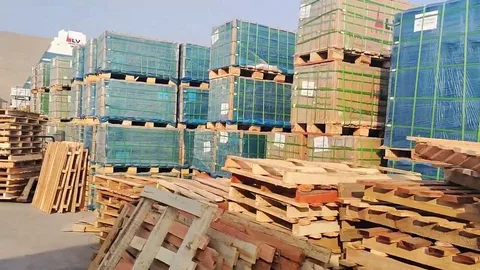
In industrial manufacturing and distribution, packaging decisions rarely exist in isolation. The performance of a shipment depends not only on the packaging materials themselves, but also on the reliability, expertise, and capabilities of the packaging supplier behind them. Pallets and crates, in particular, play a foundational role in protecting products, supporting safe handling, and maintaining operational efficiency.
As supply chains grow more complex and customer expectations increase, manufacturers are re-evaluating how they source and manage these critical packaging components.
The Strategic Role of a Packaging Supplier
A packaging supplier is often viewed as a source of materials, but in practice, the right supplier functions as an operational partner. Beyond providing pallets and crates, an experienced packaging supplier helps manufacturers align packaging decisions with handling processes, storage constraints, and transportation requirements.
This consultative role becomes especially important when products vary in size, weight, or fragility. A supplier with industry knowledge can recommend packaging approaches that reduce damage, improve workflow, and control total cost.
Manufacturers that treat packaging sourcing strategically are better positioned to adapt as volumes, product lines, and distribution channels change.
Pallets as the Foundation of Material Movement
Pallets are the most widely used load platform in industrial environments. Pallets enable efficient handling, stacking, and transport across warehouses, production facilities, and distribution centers.
Wooden pallets remain common due to their strength, versatility, and compatibility with standard material-handling equipment. However, pallet performance depends heavily on design and quality. Load capacity, deck board thickness, and stringer configuration all influence stability and durability.
Working with a knowledgeable packaging supplier helps ensure pallet specifications match product weight, stacking height, and handling conditions. Standardized pallets also reduce variability and improve efficiency across operations.
Crates for Structural Protection and Control
Crates are typically introduced when pallets alone cannot provide sufficient protection. Heavy machinery, high-value equipment, and irregularly shaped products often require the rigid structure that crates offer.
Industrial crates are usually custom-designed to support specific products. Internal blocking, bracing, and anchoring prevent movement during transit, while the external structure protects against impact and compression.
Crates are especially important for long-distance and export shipments, where loads may be handled multiple times and exposed to varying conditions. A packaging supplier with crate design expertise can help balance protection with cost and ease of handling.
Balancing Pallets and Crates in a Packaging Program
An effective industrial packaging strategy uses pallets and crates where they make the most sense. Smaller or more uniform products may ship safely on pallets with appropriate stabilization, while larger or more sensitive items require crate-based solutions.
In some cases, products are palletized within crates or crates are designed to sit securely on standardized pallets. This layered approach improves handling efficiency while maintaining high levels of protection.
A packaging supplier with a broad product offering can help manufacturers determine the right mix of pallets and crates for different applications.
Operational Efficiency and Packaging Design
Packaging design directly affects how efficiently products move through a facility. Pallets that track consistently and crates that align with forklift and racking systems reduce handling time and labor strain.
Poorly designed pallets or oversized crates can create bottlenecks, require manual adjustments, and increase the risk of damage. In contrast, packaging that integrates smoothly with material-handling equipment supports faster throughput and more predictable workflows.
Packaging suppliers with operational insight often identify design improvements that deliver efficiency gains beyond packaging alone.
Cost Control Beyond Material Price
The true cost of pallets and crates extends far beyond the purchase price. Damage-related losses, freight inefficiencies, labor time, and safety incidents all contribute to total cost of ownership.
Optimizing pallet design can reduce freight weight and improve stackability. Selecting crates only when necessary prevents overpackaging and excess expense.
Packaging audits and performance reviews, often conducted by experienced suppliers, help identify opportunities to reduce costs through smarter design rather than material substitution alone.
Safety and Risk Management
Pallets and crates have a direct impact on workplace safety. Unstable pallets, broken boards, or poorly balanced crates increase the risk of injuries and equipment damage.
Consistent pallet quality improves load stability during lifting and transport. Crates with defined lifting points and balanced weight distribution support safer handling.
A reliable packaging supplier helps manufacturers maintain consistent quality standards, reducing variability that can lead to safety issues.
Sustainability Considerations
Sustainability has become an important factor in industrial packaging decisions. Pallets and crates made from responsibly sourced materials can be reused, repaired, or refurbished, extending their service life.
Reusable pallet and crate programs reduce waste and support environmental goals while often lowering long-term costs. Packaging suppliers that offer repair and reuse options provide added value in sustainability-focused operations.
Designing pallets and crates for durability and reuse aligns environmental responsibility with operational efficiency.
The Value of Packaging Expertise
Industrial packaging challenges are rarely solved with off-the-shelf solutions alone. Product characteristics, handling frequency, and shipping conditions all influence packaging performance.
Packaging suppliers with experience across industries bring valuable insight into what works in real-world environments. Testing, prototyping, and validation help ensure pallets and crates perform as expected before full-scale rollout.
This expertise reduces trial-and-error costs and improves consistency across shipments.
Building Long-Term Supplier Relationships
Many manufacturers are moving away from transactional purchasing and toward long-term relationships with a trusted packaging supplier. Working with a single supplier for pallets and crates simplifies procurement, improves coordination, and supports continuous improvement.
Suppliers such as OEM Materials are often selected by organizations seeking comprehensive packaging support rather than individual components. These partnerships allow packaging solutions to evolve alongside production volumes and distribution needs.
Packaging as an Operational Advantage
Pallets and crates are more than just shipping tools—they are integral to how products move safely and efficiently through industrial supply chains. When supported by a knowledgeable packaging supplier, these components help reduce risk, control costs, and improve performance.
Manufacturers that invest in strong supplier relationships and thoughtful packaging design gain greater resilience and flexibility. In an increasingly demanding logistics environment, effective pallet and crate strategies are a clear operational advantage.









Leave a Reply